Have you ever looked up at the night sky and wondered why all planets seem so similar at first glance, yet each one hides a world of surprises?
Observing them isn't just about seeing dots of light; it's about understanding how size, composition, and orbit make every planet unique.
Let's dive into what sets our solar system's eight planets apart.
1. Mercury: The Swift and Scorched
Mercury, the closest planet to the Sun, moves faster than any other planet. Its rapid orbit around the Sun—just 88 Earth days—means seasons pass quickly, but the temperature swings are extreme. During the day, surface temperatures soar above 400°C, while nights plummet to -180°C.
Mercury is often best seen just before sunrise or right after sunset when it appears as a bright dot low on the horizon.
The planet's thin atmosphere is almost nonexistent, so there's nothing to retain heat. Track Mercury with a smartphone astronomy app to see when it's visible from your location, and note how its motion differs from Venus or Mars.
2. Venus: The Shrouded Sister
Venus is similar in size to Earth but enveloped in thick clouds of carbon dioxide, creating a runaway greenhouse effect. Surface temperatures reach around 465°C—hot enough to melt lead. Its rotation is retrograde, spinning opposite to most planets.
Tip for understanding: Use ultraviolet light imaging from telescopes to see patterns in Venus's clouds, revealing high-speed winds moving faster than 300 km/h.
Venus teaches us how atmospheric composition drastically influences conditions, showing that size alone doesn't dictate habitability. Try comparing its day length and temperature extremes to Mercury for context.
3. Earth: The Life Harbor
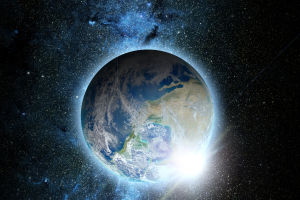
Earth stands out with its liquid water, moderate temperatures, and protective atmosphere. Unlike other planets, it supports a vast range of life due to its stable climate and magnetic field, which shields the surface from harmful solar radiation.
Track local weather patterns and relate them to Earth's axial tilt and orbit. This helps understand why other planets with different tilts or no atmosphere have more extreme climates.
4. Mars: The Red Explorer
Mars, often called the Red Planet, has dusty plains, polar ice caps, and towering volcanoes like Olympus Mons. Its thin atmosphere and lower gravity mean temperatures can drop below -100°C, making surface water unstable.
Observe Mars with a telescope during opposition when it's closest to Earth. Note the color variations and polar caps, which reveal seasonal changes similar to but harsher than Earth's.
5. Jupiter: The Gas Giant King
Jupiter is massive, with a thick hydrogen and helium atmosphere and a Great Red Spot—a storm larger than Earth. Its strong gravity affects nearby objects, and it has over 90 moons, including Ganymede, the largest in the solar system.
Use binoculars or a small telescope to spot Jupiter's four largest moons—Io, Europa, Ganymede, and Callisto—and track their motion over several nights to see orbital dynamics in action.
6. Saturn: The Ringed Wonder
Saturn's striking rings, made of ice and rock particles, are the most visible in the solar system. Though less dense than Jupiter, it has a similar gaseous composition and powerful winds exceeding 1,800 km/h.
Use a telescope to examine the rings' gaps and divisions, like the Cassini Division, to understand how gravitational interactions shape planetary rings.
7. Uranus: The Tilted Ice Giant
Uranus spins almost on its side, giving extreme seasonal variations. Its icy atmosphere contains methane, giving the planet a pale blue-green color. Uranus also has faint rings and 27 known moons.
Compare Uranus's tilt and color to Neptune to explore how composition and orientation affect visual appearance and climate.
8. Neptune: The Windy Blue Giant
Neptune, similar in size to Uranus, has supersonic winds reaching 2,100 km/h and vivid blue hues caused by methane. It has dynamic weather patterns, including storms visible as dark spots.
Track Neptune's motion relative to nearby stars using long-exposure astrophotography, which demonstrates the planet's slow orbit and distant location in the solar system.
The eight planets are more than points of light; each tells a story of composition, motion, and environment. Observing them can spark curiosity and deepen understanding of how gravity, atmosphere, and rotation create a dazzling diversity of worlds. Next time you glance up at the night sky, consider how every dot has its own secrets waiting to be explored.